Arthur vs Chase — Domi XC
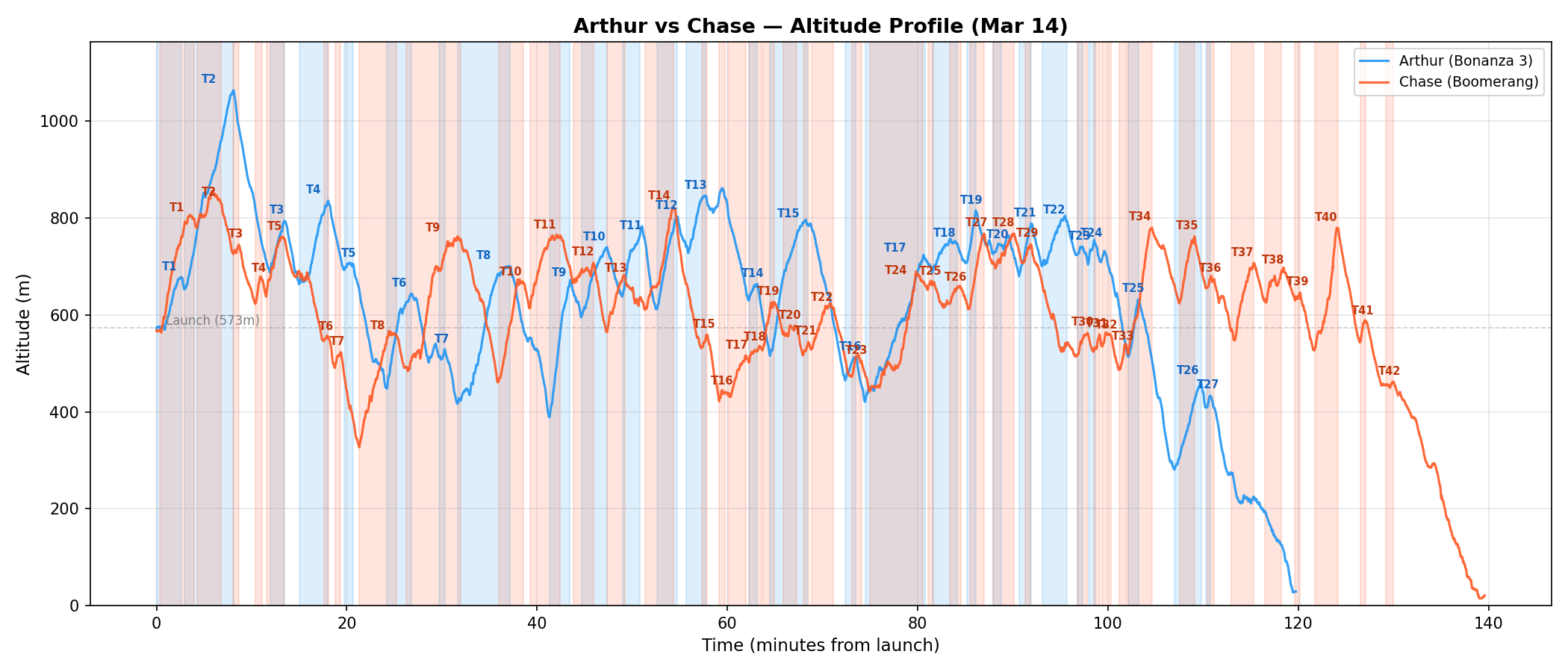
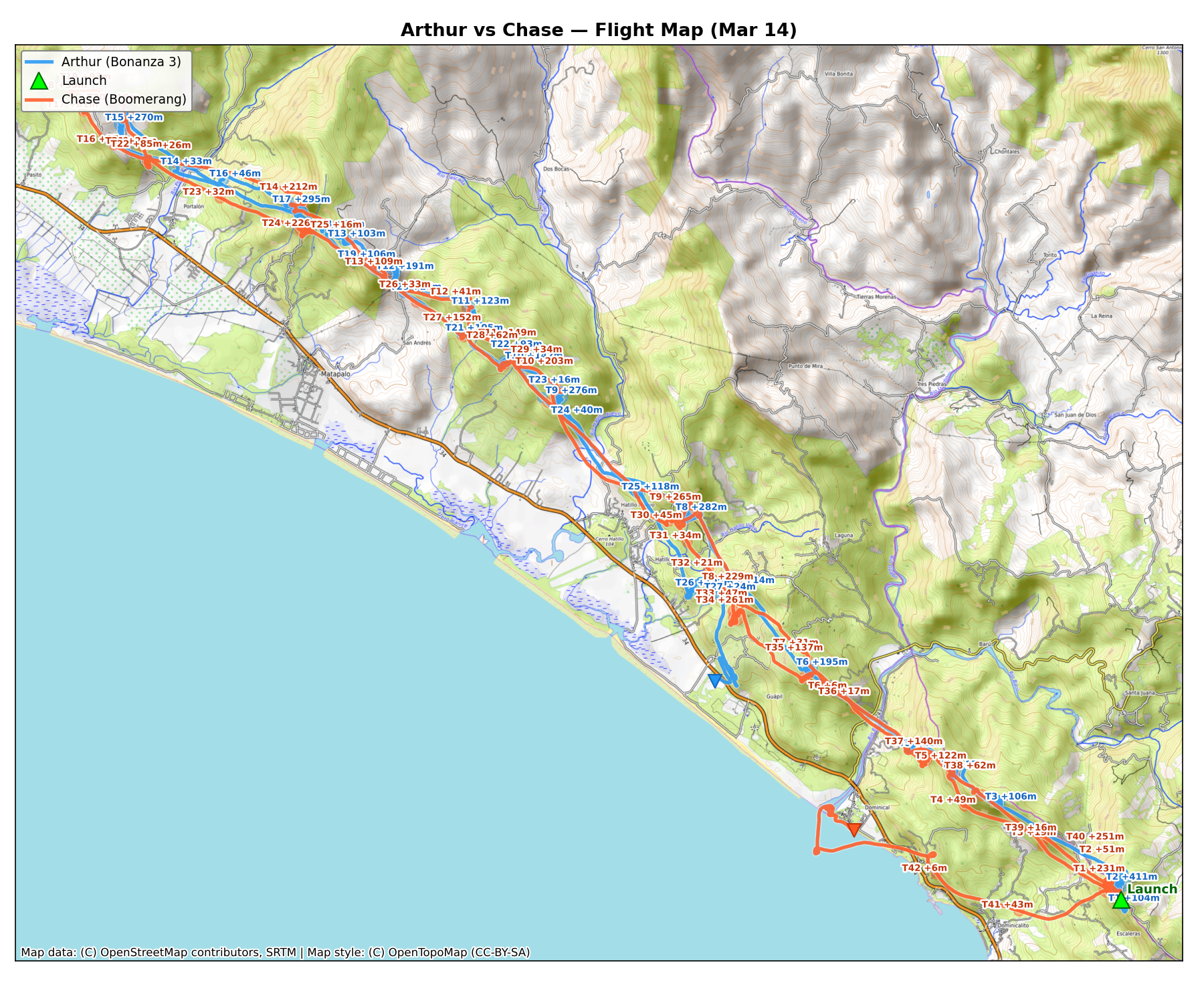
Both launched from Domi within 5 minutes of each other and flew the same NW corridor along the coast. Arthur reached 1,064m — the highest altitude we've seen from Domi — then flew one-way to land near the coast. Chase did an out-and-back, logging 139 minutes in the air with 42 thermals.
🔵 Arthur (ArthurDrou)
🟠 Chase
Thermal Skill — Head to Head
Turns
Consistency
Extraction
(m/s)
(m/s)
📊 What the Data Shows
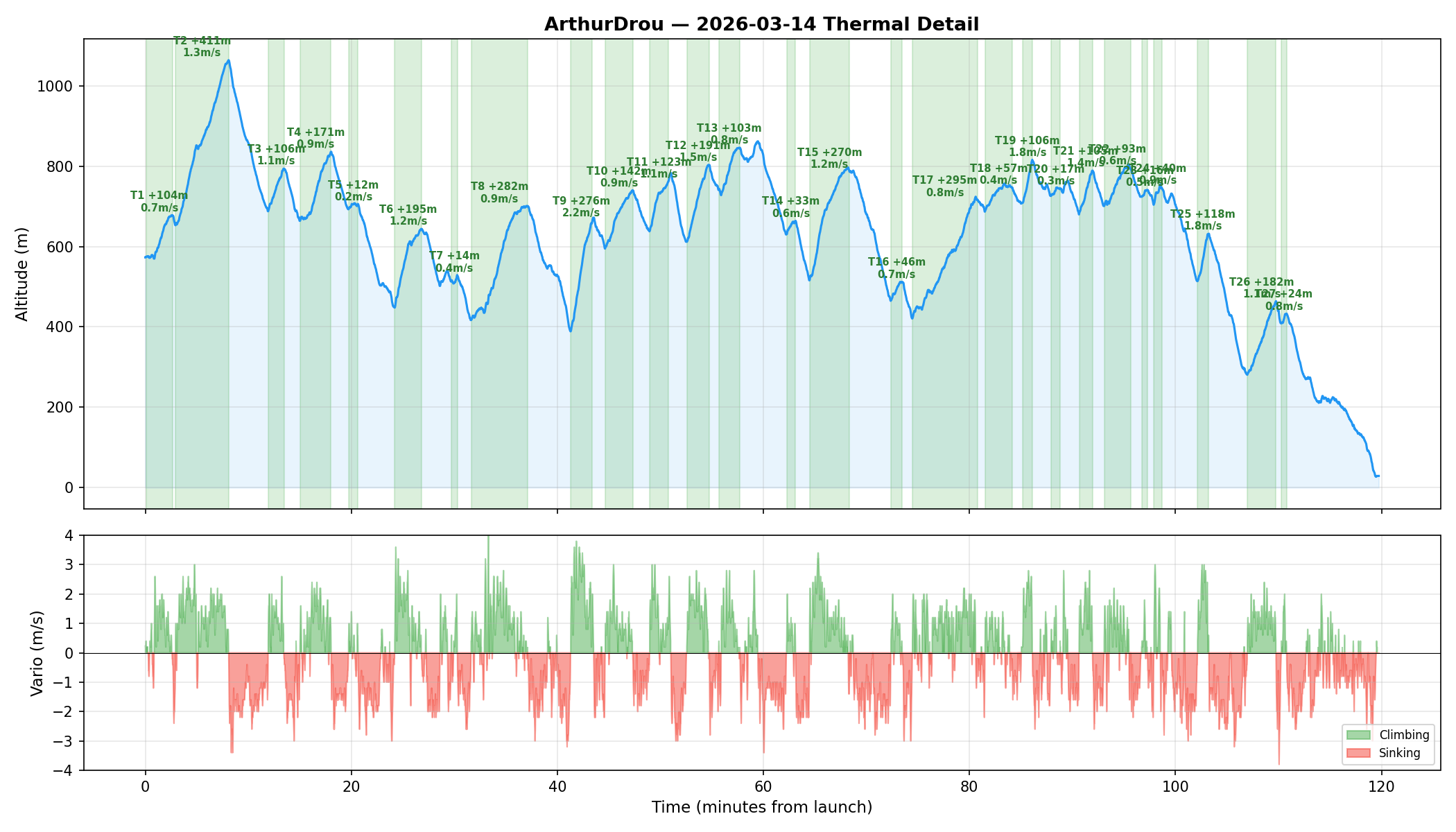
Arthur centers faster and stays in the core more reliably. Lock-in at 1.6 turns vs 2.2, consistency at 95.7% vs 91.3%. But the standout number is core extraction: 49.6% vs 36.3%. Arthur is capturing nearly half of the available lift in each thermal — that's well above the corpus median (35%).
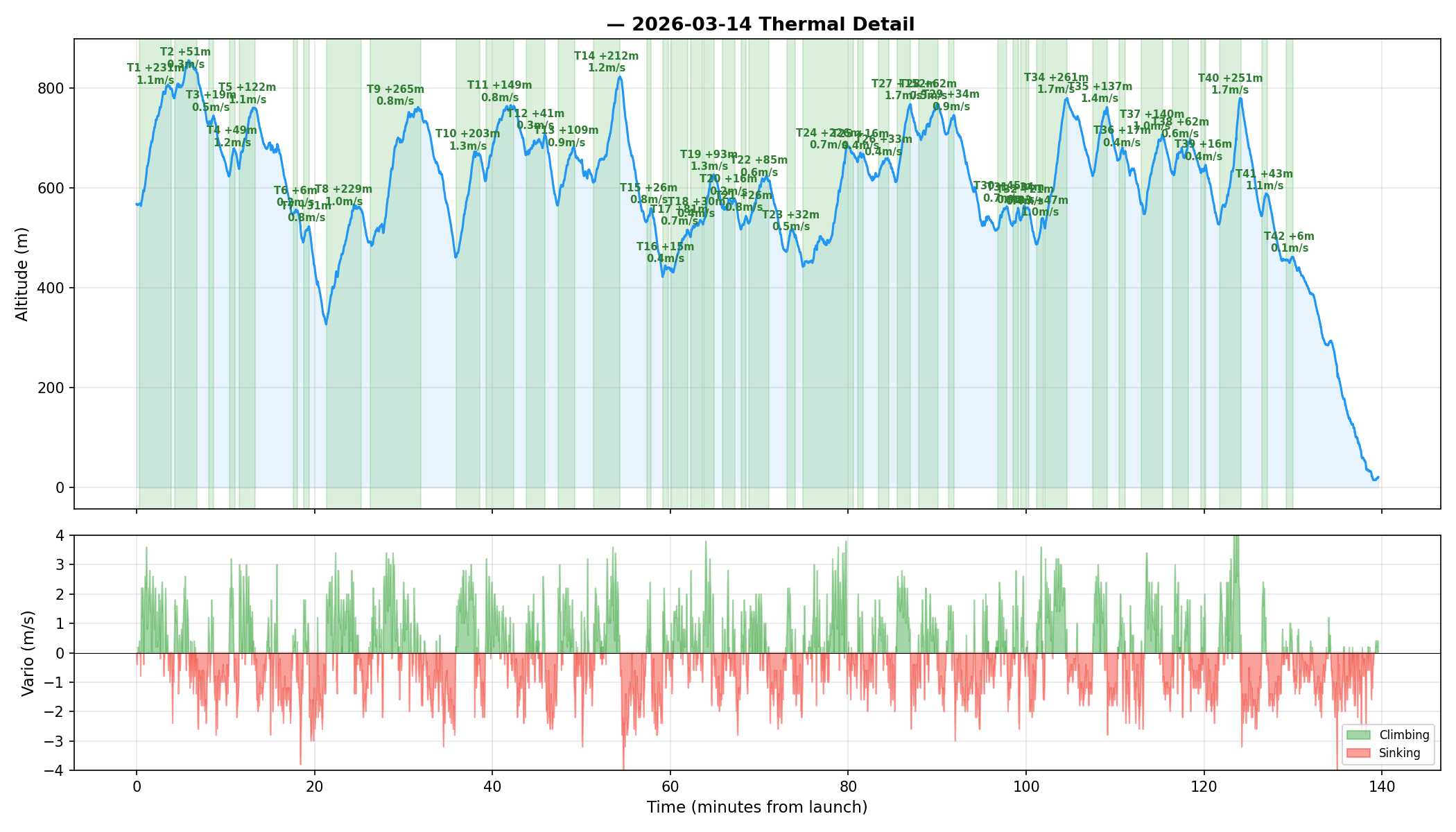
Chase found stronger peaks (2.36 m/s vs 2.05 m/s) but didn't sustain them as well, averaging 0.87 vs Arthur's 1.04. Chase also worked 42 thermals to Arthur's 27 — more frequent, shorter thermal encounters.
The altitude gap tells the story. Arthur hit 1,064m (491m above launch) — the highest we've recorded from Domi. Same conditions, same thermals, but Arthur's tighter centering and higher extraction let him climb 200m higher than Chase's peak of 856m.
Altitude Profile
Flight Map
Thermal Detail — Arthur
Thermal Detail — Chase
🔑 Key Observations
Arthur's T2 was the flight-maker. A single 5-minute thermal that gained 411m to 1,064m. At that altitude, the entire corridor opens up — you can glide a long way and still have options. Chase's biggest single gain was 265m (T9). Getting that initial high climb changes the whole flight.
Chase's endurance is impressive. 139 minutes, 42 thermals, out and back. That's a lot of time managing energy, reading the sky, and making return-trip decisions. The out-and-back is harder than one-way — you have to find enough lift on the return when conditions may be weakening.
Different strategies, both valid. Arthur extracted maximum altitude from fewer thermals. Chase worked more thermals at lower altitudes but covered the same ground twice. Both approaches have trade-offs depending on what you're optimizing for.